


 KO
KO JP
JP CN
CN TH
TH VN
VN MG
MGWhy Is My Period Late or Early? 5 Common Causes of Irregular Cycles
"My period dates change every month."
"My period is coming earlier than it used to."
"My period is way overdue this time."
These are some of the most common concerns expressed by patients visiting our clinic.
It is completely normal for your menstrual cycle to vary slightly from month to month. Your period does not necessarily need to start on the exact same date every month. Daily lifestyle factors such as stress, lack of sleep, changes in body weight, and exercise can all affect your cycle.
Hormonal fluctuations and changes in ovulation can also cause your period to arrive earlier or later than expected.
However, if irregular periods become a recurring pattern or you notice persistent changes from your usual cycle, it is important to look more closely at the possible causes. The goal is to determine whether the change is temporary or whether it may be related to an underlying hormonal or ovulatory issue.
If you frequently experience early or late periods, don't focus only on the dates on the calendar. It is important to consider the bigger picture, including changes in your stress levels, weight, sleep patterns, hormonal balance, and ovulation.
5 Main Causes of an Irregular Menstrual Cycle
Your menstrual cycle is regulated by a complex interaction between the hypothalamus, pituitary gland, and ovaries.
This hormonal communication system, known as the hypothalamic-pituitary-ovarian (HPO) axis,
plays an important role in regulating reproductive hormones and ovulation.
When this system is disrupted, ovulation may occur earlier, later, or may not occur at all.
As a result, your menstrual cycle can become shorter, longer, or irregular.
Here are five common causes of irregular periods:
Primary Cause | Impact on Menstrual Cycle | Accompanying Symptoms & Changes |
Hormonal Imbalance | Shifts in ovulation timing and cycle length | Changes in menstrual flow, irregular periods |
Stress & Sleep Changes | Delayed ovulation or anovulation (lack of ovulation) | Late periods, missed periods |
Polycystic Ovary Syndrome (PCOS) | Ovulatory dysfunction | Irregular periods, acne, excessive hair growth (hirsutism) |
Thyroid Dysfunction | Alterations in cycle length and blood flow volume | Fatigue, unexplained weight changes |
Extreme Weight Changes & Nutritional Deficiency | Ovulation suppression | Delayed periods, amenorrhea (absence of menstruation) |
1. Hormonal Imbalance
Female reproductive hormones, particularly estrogen and progesterone,
play an important role in regulating the menstrual cycle.
These hormones are involved in several essential stages of the cycle,
including follicular development, ovulation, and the thickening and shedding of the uterine lining.
When hormone levels fluctuate, the timing of ovulation can also change. As a result, your period may arrive earlier or later than usual.
Temporary hormonal fluctuations are common and do not necessarily indicate a medical condition.
However, if changes in your menstrual cycle continue or become a recurring pattern,
it may be worth evaluating your hormonal and reproductive health.
2. Stress and Lifestyle Changes
Stress is one of the most common everyday factors that can affect menstrual regularity.
Significant psychological stress and chronic sleep deprivation can interfere with the hypothalamic-pituitary-ovarian (HPO) axis,
which plays an important role in regulating reproductive hormones.
When this hormonal communication system is disrupted, ovulation may be delayed or may not occur during a particular cycle. This can lead to:
- Delayed ovulation: Your period may arrive later than expected.
- Anovulation: Ovulation may not occur, potentially resulting in a missed period.
- Longer menstrual cycles: The interval between periods may become longer than usual.
Other lifestyle changes may also affect menstrual regularity, including:
- Increased psychological stress
- Lack of sleep
- Excessive exercise
- Major changes in your daily routine
- Significant weight changes
- Restrictive dieting
If your period suddenly becomes irregular, it can be helpful to consider whether any of these factors have changed recently.
3. Polycystic Ovary Syndrome (PCOS)
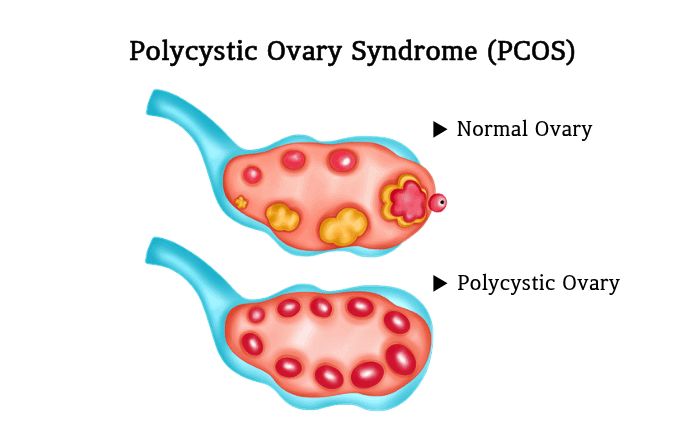
For women of reproductive age, recurrent irregular menstrual cycles can sometimes be associated with polycystic ovary syndrome (PCOS).
PCOS is a hormonal condition commonly associated with ovulatory dysfunction and hyperandrogenism.
When ovulation becomes irregular or does not occur regularly, menstrual cycles may become prolonged, unpredictable, or infrequent.
Along with changes in menstruation, other features may also occur
Key Features | Accompanying Symptoms & Changes |
Ovulatory Dysfunction | Irregular menstrual cycles, delayed periods, or missed periods |
Hyperandrogenism | Acne, excessive facial/body hair growth (hirsutism), androgenic alopecia (hair thinning) |
Metabolic Distortions & Related Changes | Weight gain or difficulty losing weight, insulin resistance |
However, experiencing irregular periods alone does not automatically mean that you have PCOS.
A diagnosis of PCOS requires a comprehensive evaluation that may include your menstrual cycle pattern,
clinical symptoms, blood tests, and pelvic ultrasound findings.
If you frequently experience delayed periods or unusually long intervals between cycles,
it is worth consulting a healthcare professional to evaluate possible ovulation disorders, including PCOS.
4. Thyroid Dysfunction
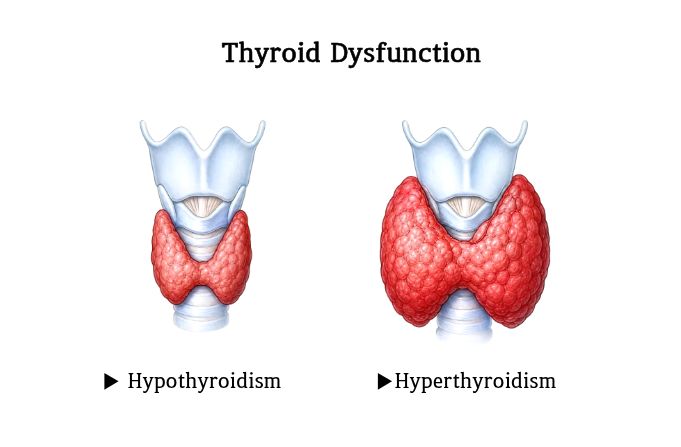
Thyroid hormones play an important role in regulating metabolism and can also influence reproductive function and the menstrual cycle.
Both an underactive thyroid (hypothyroidism) and an overactive thyroid (hyperthyroidism)
can be associated with changes in menstrual cycle length and blood flow.
Thyroid Condition | Menstrual Changes |
Hypothyroidism | Heavy menstrual bleeding (menorrhagia), irregular cycle lengths |
Hyperthyroidism | Light menstrual flow (hypomenorrhea), missed or irregular periods |
If changes in your period occur together with symptoms such as unexplained weight fluctuations,
persistent fatigue, or heart palpitations, evaluating thyroid function and other potential endocrine causes may be appropriate.
5. Rapid Weight Changes and Nutritional Deficiencies
Extreme dieting, inadequate nutritional intake, significant weight loss, or excessive exercise can affect menstrual function.
When the body does not receive enough energy or nutrients, hormonal signals involved in normal reproductive function may be reduced.
This can interfere with ovulation and lead to delayed or absent periods.
This pattern may occur with functional hypothalamic amenorrhea, a condition in which menstruation becomes irregular or stops in association with factors such as low energy availability, significant weight loss, psychological stress, or excessive exercise.
Conversely, rapid or significant weight gain can also affect hormonal balance and menstrual regularity.
Therefore, if your menstrual cycle changes after a major change in weight, diet, or exercise habits,
these factors should be considered as part of the overall evaluation.
When Should You See a Doctor for Early or Late Periods?
Menstrual cycles naturally vary from person to person, and a single unusual cycle does not necessarily indicate a health problem.
However, if your normally regular cycle becomes consistently irregular or you notice recurring changes,
it may be appropriate to seek a professional medical evaluation.
Consider consulting an OB/GYN if you experience:
When to Seek Medical Evaluation | What Your Doctor Will Check |
Consistently shorter menstrual cycles | Evaluate causes for frequent periods (polymenorrhea) |
Repeatedly delayed or late periods | Assess ovulation status and hormone balance |
Absence of menstruation for an extended period | Identify the underlying cause of amenorrhea |
Sudden, significant changes in blood flow volume | Investigate hormonal fluctuations or uterine conditions |
Recurring spotting or bleeding between periods | Determine the cause of abnormal uterine bleeding (intermenstrual bleeding) |
Accompanied by symptoms like acne or excessive hair growth | Check for Polycystic Ovary Syndrome (PCOS) or androgen imbalance |
Accompanied by major, unexplained weight changes | Evaluate endocrine system health and nutritional status |
