


 KO
KO JP
JP CN
CN TH
TH VN
VN MG
MGCan Labiaplasty Reduce Sexual Sensation? Understanding the Sensory Ner…
The labia minora and clitoris have different sensory nerve pathways.
Labiaplasty is intended to relieve discomfort, not alter sexual sensation.
However, excessive tissue removal or repeated surgery may affect sensation, making careful surgical planning essential.
More patients have recently been visiting our clinic to discuss surgery for enlarged labia minora.
When younger patients come in with a parent, they often carefully ask questions such as:
“Could the nerves be damaged if part of the labia minora is removed?”
“What if sexual sensation becomes weaker or less sensitive after labiaplasty?”
These concerns are understandable. The labia minora are sensitive and do contain sensory nerves.
Today, we will address these questions by reviewing the anatomy of the external genitalia and explaining how labiaplasty relates to sensation.
1. Sensory Nerve Anatomy of the Vulva, Labia Minora, and Clitoris
Sensation in the vulva is supplied primarily by the pudendal nerve.
The posterior labial nerves contribute to sensation in the labia minora,
while clitoral sensation is supplied mainly by a separate nerve called the dorsal nerve of the clitoris.
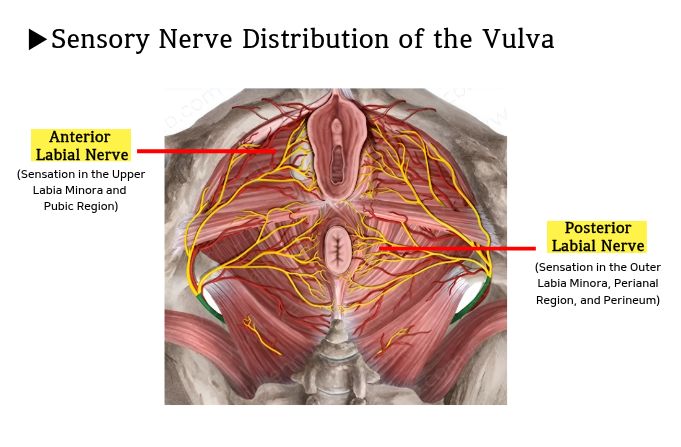
The nerve supply to the labial region can be described through different sensory branches.
The posterior labial nerves, which provide sensation to much of the labial area, supply the region near the anus,
the outer portions of the labia, and the perineum.
There are also anterior labial nerves that contribute to sensation in the upper labial and pubic regions.
Although the clitoris may appear closely connected to the labia minora,
its principal sensory nerve follows a distinct anatomical pathway.
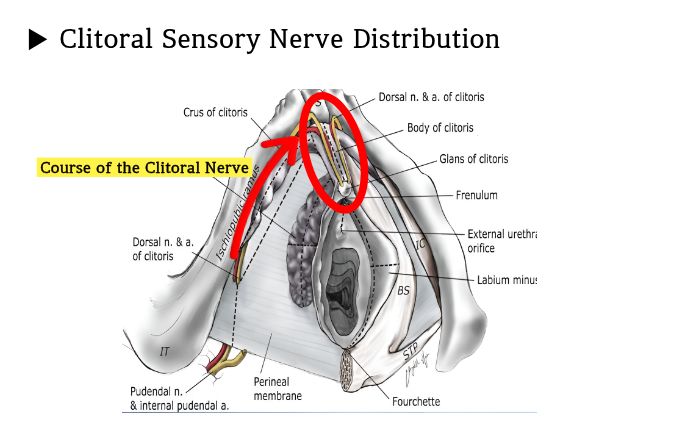
The dorsal nerve of the clitoris travels beneath the pubic bone and runs along the upper surface of the clitoris.
It is a relatively large sensory nerve and plays an important role in sexual sensation.
Because the principal sensory nerve of the clitoris is anatomically distinct from the sensory branches supplying the labia minora,
standard labiaplasty does not normally involve this area.
To use a simple analogy, the labia minora and clitoris are like two homes in the same neighborhood that use electricity
but are connected through separate electrical lines.
2. What Can Cause Reduced Sensation After Labiaplasty?
Many patients ask, “Will I lose sensation after labiaplasty?”
The labia minora do contain sensory nerves. However, as explained above,
these nerves are anatomically distinct from the main clitoral nerve that is closely associated with sexual sensation.
When surgery is performed within an appropriate anatomical range, persistent sensory loss is considered uncommon.
What, then, can cause reduced sensation after labiaplasty?
Potential causes include excessive tissue removal, an overly aggressive surgical design extending toward the clitoris,
or surgery performed without a sufficient understanding of the relevant anatomy.
The risk may also increase when repeated revision procedures have already changed or distorted the original anatomical structures and
further surgery is performed too aggressively.
For this reason, the surgeon’s anatomical knowledge, surgical design, and clinical experience are very important.
Persistent loss of sensation is considered very uncommon after appropriately performed labiaplasty and
should not be regarded as a typical outcome of the procedure.
3. Can Sensation Improve After Surgery?
Patients also sometimes ask,
“Do some people actually experience better sensation after surgery?”
Some patients do report that sensation feels improved.
This may occur because friction, pain, and discomfort caused by enlarged labia minora are reduced,
allowing sexual activity to feel more comfortable.
In selected cases where thick clitoral hood tissue is addressed as part of a carefully planned procedure,
clitoral stimulation may feel more direct. Some patients report experiencing orgasm for the first time,
reaching orgasm more quickly, or feeling more satisfied with their sexual activity.
However, an important distinction must be made.
Labiaplasty is not a procedure intended to change or enhance sexual sensation.
Its primary purpose is to relieve physical discomfort associated with enlarged or asymmetrical labia minora.
Because nerve injuries may not fully recover, it is important to determine
which areas require caution and how much tissue can be safely and appropriately treated before deciding to undergo surgery.
Frequently Asked Questions FAQ
Q. When can I return to daily activities after labiaplasty?
A. After DAUM Return Labiaplasty, many patients can usually walk, go out, and take light walks after about two days.
Depending on their condition, patients may gradually resume activities such as exercise, golf, or Pilates
after approximately one week. Sexual intercourse, bathing, and swimming may generally be resumed after about two to three weeks.
Recovery varies from person to person, so the timing should be adjusted
according to the individual’s healing progress and the surgeon’s guidance.
Q. What happens if my period starts before labiaplasty?
A. Some patients worry that an unexpected change in their cycle may interfere with surgery.
In many cases, the procedure can still be performed even if menstruation begins.
However, the clinic should be informed in advance so that the medical team can confirm the plan based on the patient’s condition and the clinic’s protocol.
Q. Can sensation feel reduced immediately after labiaplasty?
A. Immediately after surgery, swelling and tension in the tissues may cause sensation to feel temporarily dull or different from usual.
If the sensory change persists for an extended period or is accompanied by burning pain or significant discomfort,
the patient should be evaluated by the treating physician.
Labiaplasty aims to relieve discomfort, not alter sexual sensation. Because the labial and
main clitoral sensory nerves follow different pathways, significant sensory loss is not generally expected after appropriately performed surgery.
However, excessive tissue removal or surgery extending toward the clitoris may increase the risk of nerve injury, making careful, individualized surgical planning essential.
At [Gangnam DAUM Women’s Clinic], Return Labiaplasty begins with an assessment of the individual causes of discomfort.
We then develop a personalized surgical plan that considers the anatomy surrounding the labia minora and clitoris,
as well as both functional concerns and aesthetic balance.
