


 KO
KO JP
JP CN
CN TH
TH VN
VN MG
MGA Patient Case of Side Effects Associated with an Intrauterine Device …
This case involves a 32-year-old patient at our clinic
who had a Mirena® intrauterine device (IUD) inserted two years ago
due to severe menstrual cramps and heavy menstrual bleeding.
About three months after insertion,
her menstrual flow decreased significantly
and was well controlled for a period of time.
However, over the past six months,
she began experiencing persistent irregular bleeding,
which led her to return to the clinic for evaluation.
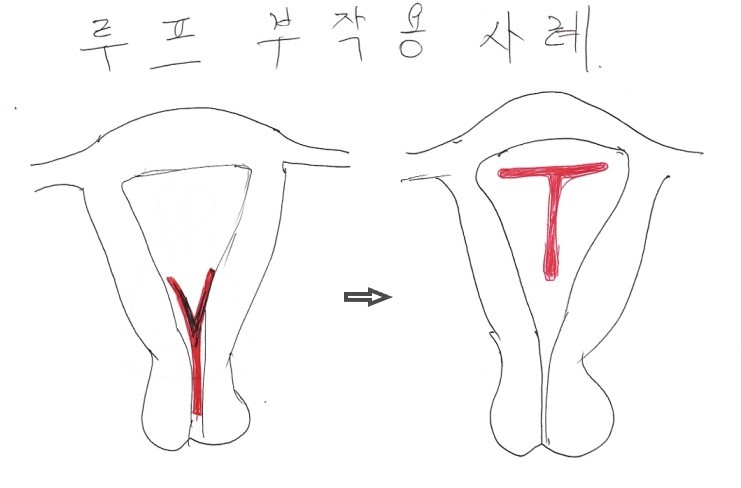
On ultrasound examination,
the Mirena® intrauterine device (IUD) was found to have shifted downward,
positioned toward the lower uterus and cervical canal.
These days, Mirena is known to be effective for up to 8 years
when used for contraception.
However, when bleeding resumes,
many patients naturally worry:
“Has the contraceptive effect decreased?”
“Could there be another problem?”
In such cases, simply pushing the IUD back into place
often does not result in stable positioning,
and the device is likely to migrate downward again.
Therefore, we generally recommend removing the existing IUD
and reinserting a new Mirena.
For this patient as well,
the previous device was removed
and a new Mirena IUD was inserted.
It is important to note that this patient
had not undergone routine follow-up examinations after insertion
and only returned to the clinic after experiencing bleeding for six months.
For patients with a Mirena IUD in place,
the following follow-up schedule is strongly recommended
to maintain safe and effective contraception:
▶ A follow-up visit within 2–3 months after insertion to confirm proper positioning
▶ Regular check-ups every 6–12 months thereafter
Following this schedule helps ensure
that the contraceptive effect is maintained safely and reliably.
[ A Note from Director Kim Min-kyoung ] Mirena® is not used solely for contraception. It is also widely utilized for the treatment of various gynecologic conditions, including premenstrual syndrome (PMS), heavy menstrual bleeding, menstrual pain, endometrial polyps, endometrial hyperplasia, and irregular uterine bleeding. Mirena releases a steady, low dose of the hormone levonorgestrel, which helps keep the endometrial lining thin and works by suppressing ovulation and limiting sperm movement. Its long-term safety and high contraceptive effectiveness have been well established over many years. However, although uncommon, side effects such as IUD displacement, expulsion, irregular bleeding, ovarian cysts, or acne may occur. For this reason, Mirena placement should not be considered a “set-and-forget” procedure. Regular gynecologic follow-up is essential to monitor the position and condition of the IUD and to ensure continued safety and effectiveness. Please remember that routine check-ups are a key part of safe Mirena use. |
